Two clocks, one patient
Magnesium Series Episode 4

Two independent clocks have to run together
The first is the healing clock, which is how quickly a particular patient's bone regains load-bearing capacity. It varies with indication, anatomy, age, vascular supply, and other variables clinicians know intuitively.
The second is the degradation clock, which is how quickly the implant loses mechanical integrity through corrosion. It varies with alloy, geometry, surface treatment, microstructure and local pH.
A new generation of degradable structural metal
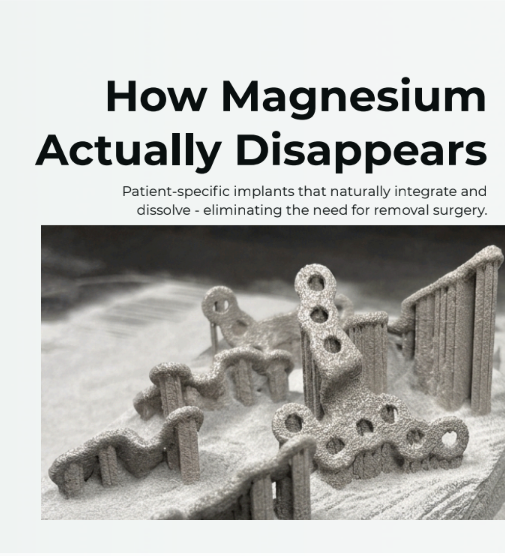
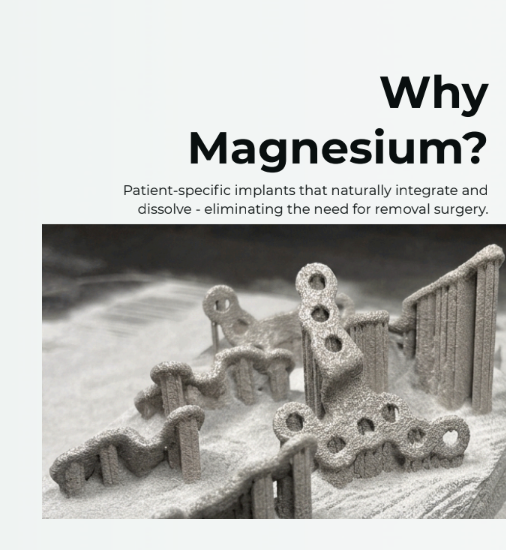
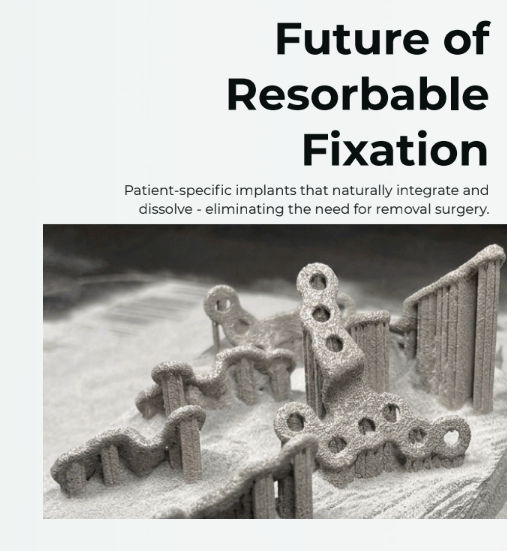
This is why “one alloy, one geometry, one indication” is not a viable strategy. The design space includes alloy chemistry, surface treatment, lattice architecture, manufacturing route and post-processing.
Each of these modulates the degradation curve, and the interactions are not always intuitive.
Where PSI and degradation engineering become one
A craniofacial fixation device in a growing skull has to hold during osteotomy healing, has to avoid interfering with subsequent skeletal growth, and has to be cleared from the body before the next reconstructive stage. The right answer is not “as long as possible.”
That kind of specificity does not come from material selection alone. It comes from designing the implant to a degradation specification, the same way it is already designed to a geometric one.
This is where patient-specific design, additive manufacturing and corrosion engineering stop being three separate disciplines and start being one.